Over the past couple of weeks, I’ve done a lot of work on making decisions based on a lot of research and discussions. This might be a boring read, but I want to document my decisions for the build process and keep my own thoughts straight.
First the engine. It’s a big decision and complicated. I’ve decided to overhaul a used engine and do most of the work myself with the help of a few experienced professionals. There is a local guy who has built many engines for race planes and has a reputable engine shop that has offered to be a technical resource and allow me to use his facilities and equipment. While this won’t be for a while, our hours long conversation has reassured me of this approach vs. buying a new engine. He also advised me on which variants and the things to look for in a run-out or used core. So I’ll be keeping an eye out for good deals on eBay, Barnstormers, etc. over the coming year or so and hopefully make a purchase when the right opportunity comes along.
Building my own engine will also allow me to customize it with the options efficiently and cost effectively. I have committed to running the full EFII electronic ignition and fuel injection system. I like the ease of operation the system provides and most of all, the efficiency of the system. I will use the dual ECU option to provide redundancy for IFR operation. Combined with the Show Planes cowl, Flightline AC system, and possibly a horizontal induction pan, there will be some modifications required for sure. But this will be the airplane that I want and an efficient, modern platform.
It will also be heavily electrically dependant. I’m starting on the electrical schematic to include one main battery, one 70 amp alternator, one backup 30 amp alternator, and integrated back up batteries for the EFIS systems. Using the VPX Pro system will integrate my electrical loads with a few exceptions and provide a better insight into the health of the system.
More details to come on all of these decisions, but it paves the way for planning purposes and at least lets me get started on some of the systems side of the build.
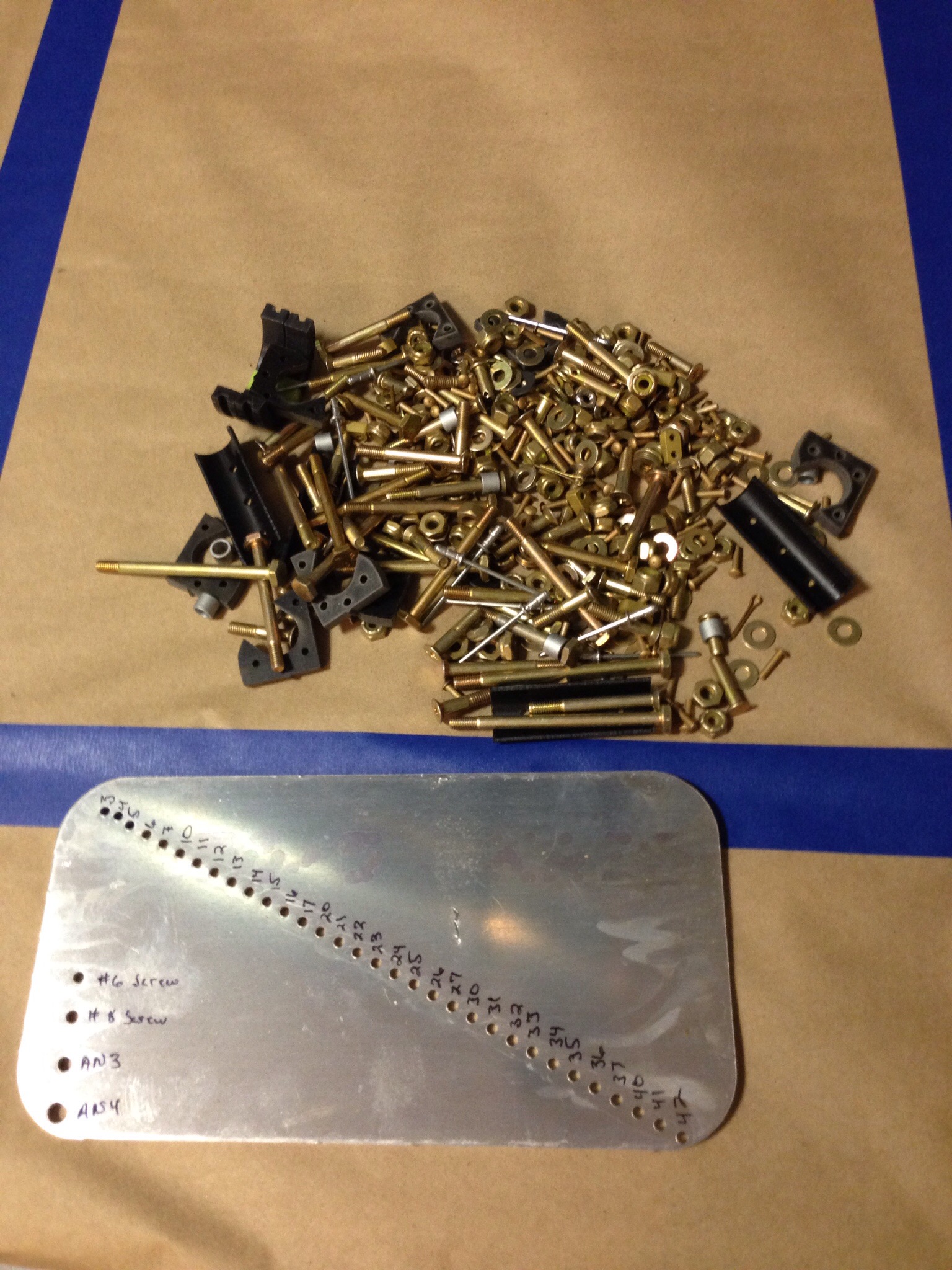
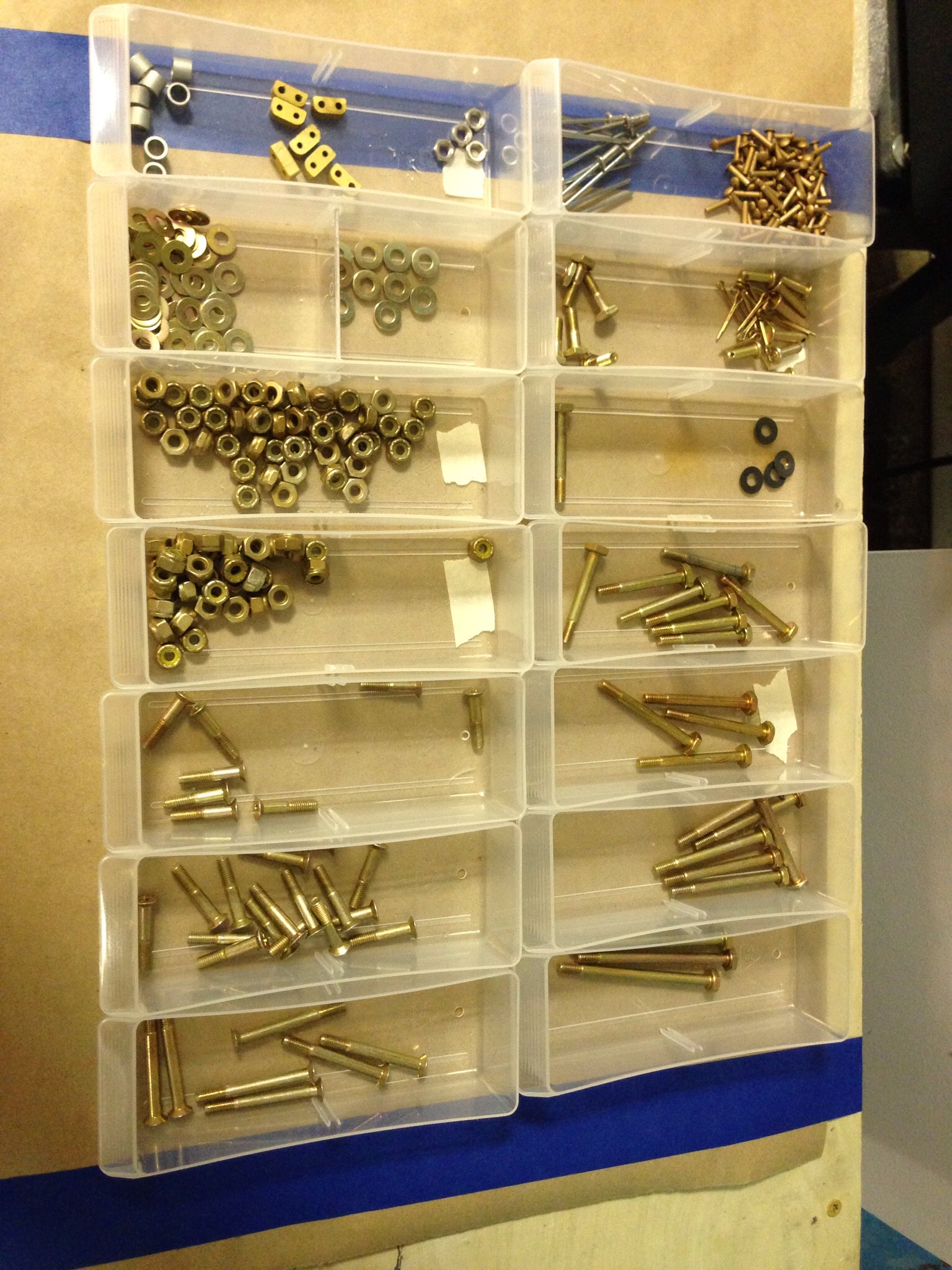
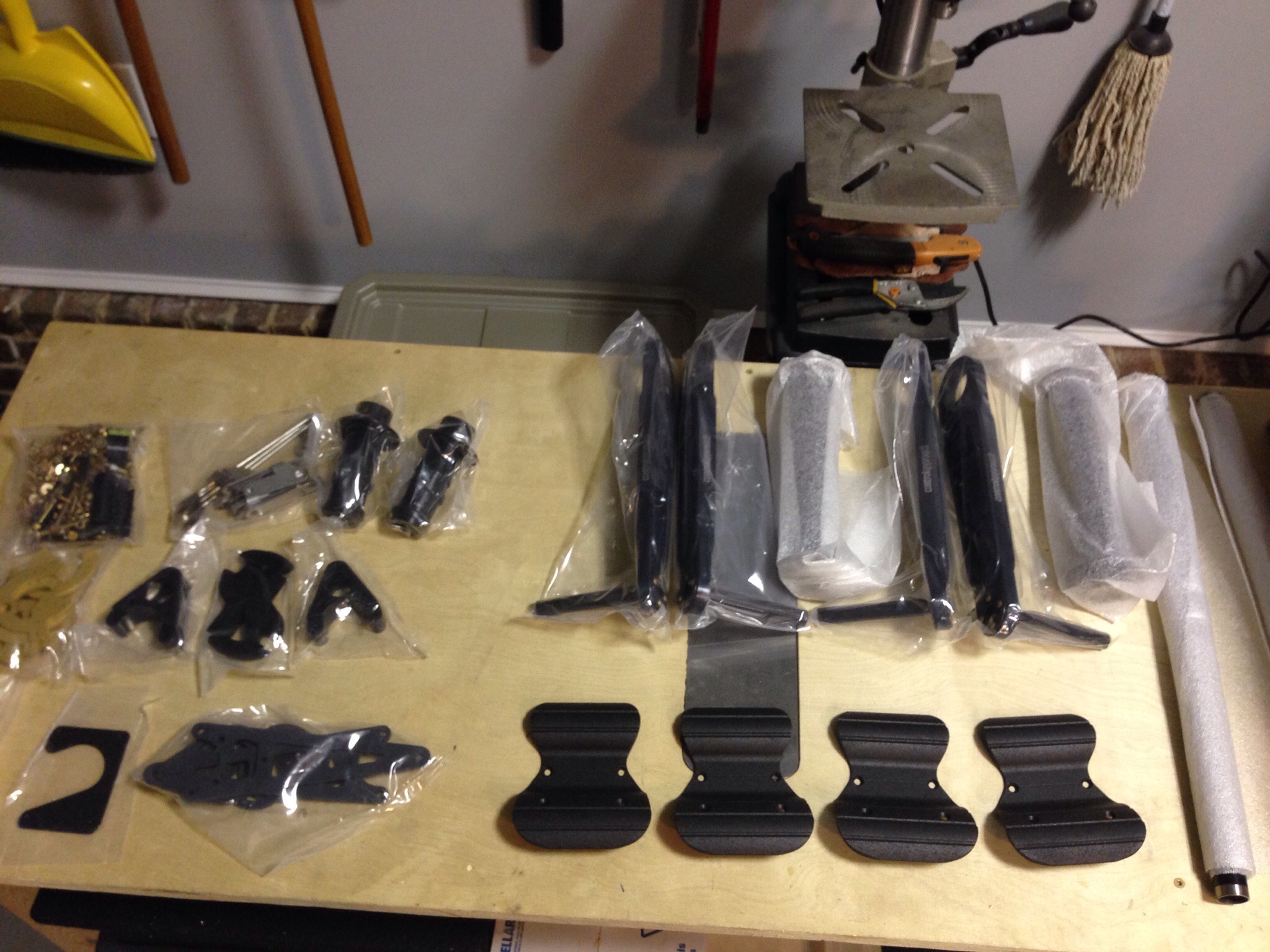
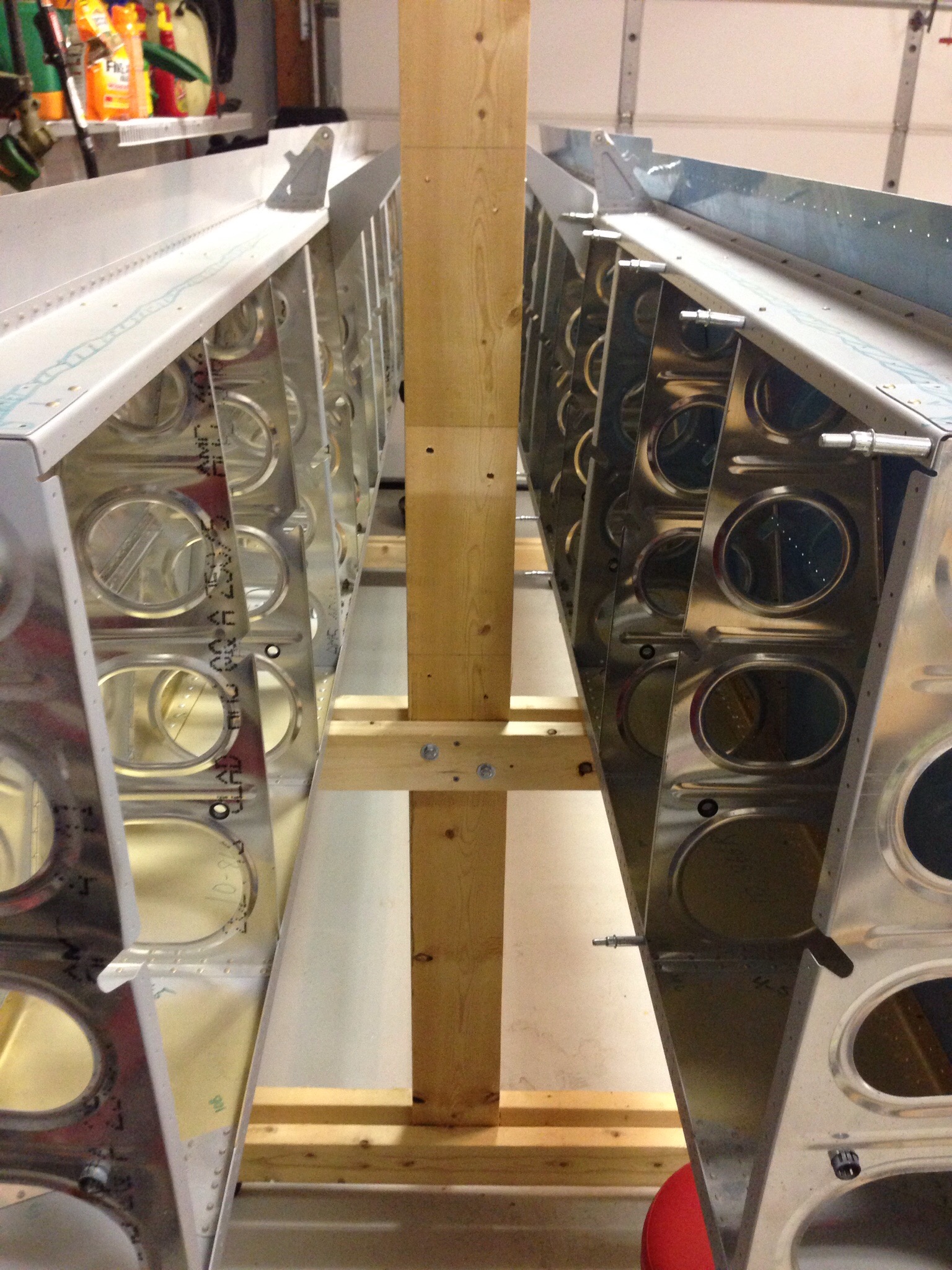
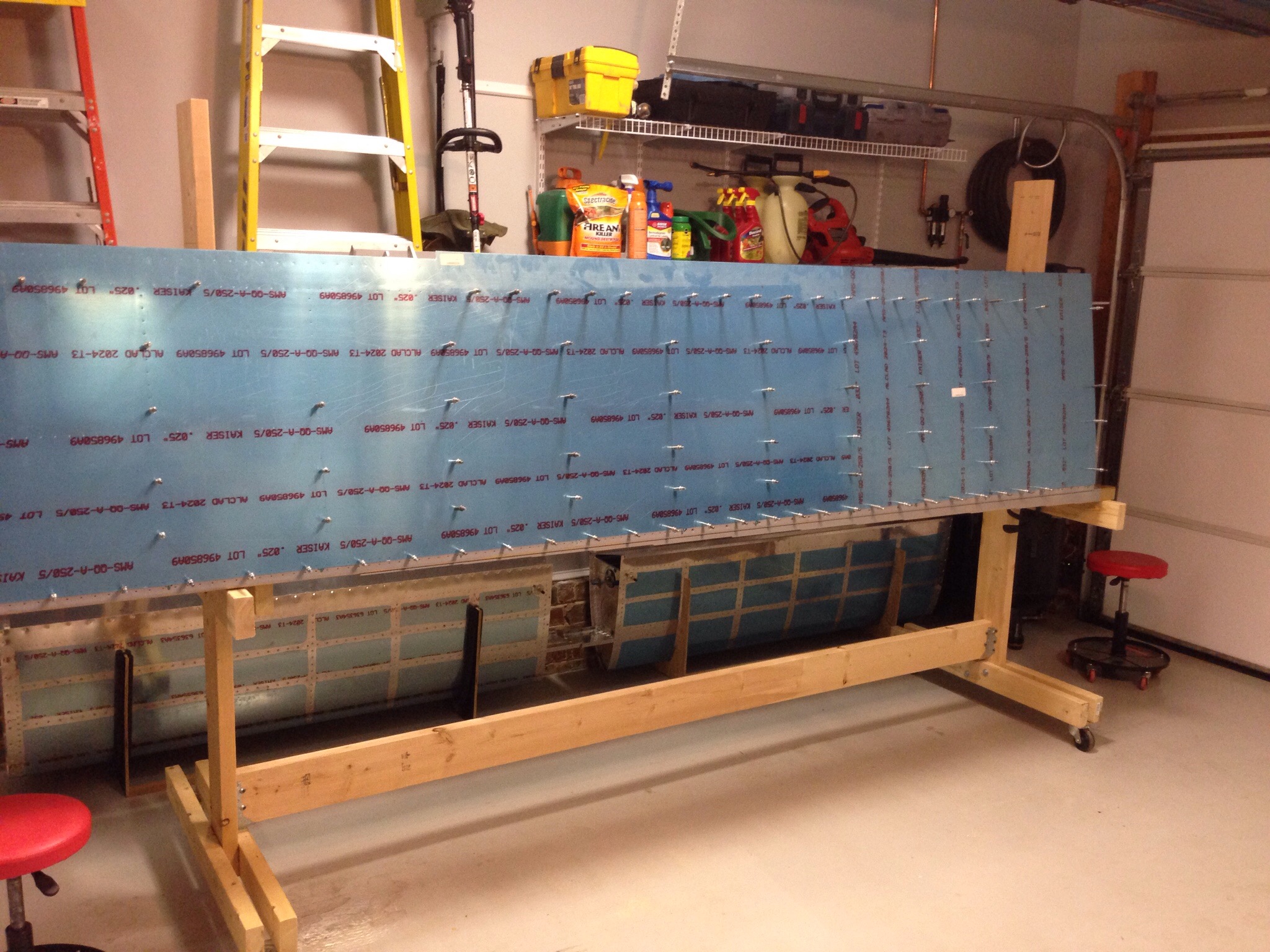
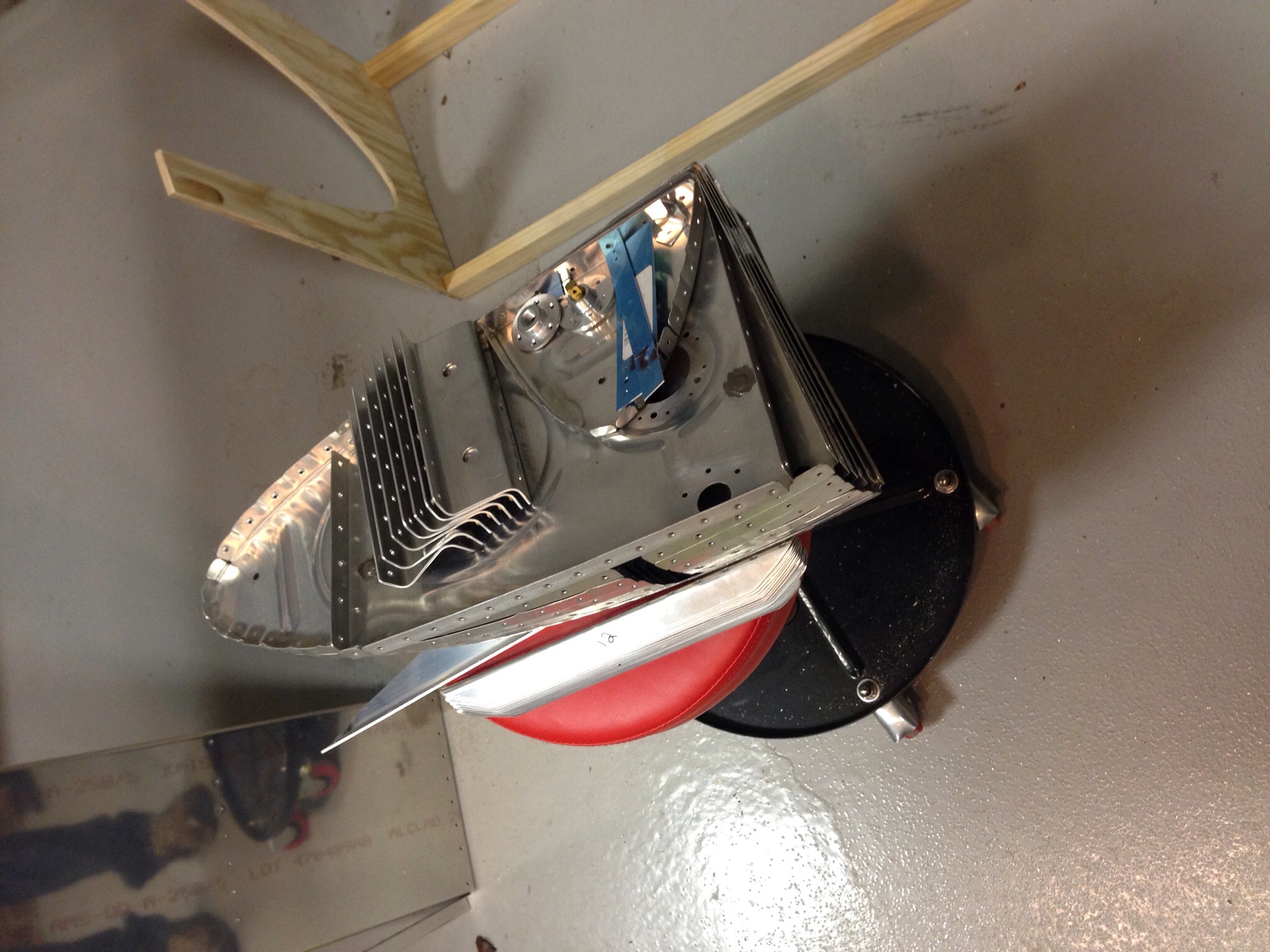
 It’s hard to believe that almost all the components of the fuel tank can fit on my little stool. I scuffed the joint surfaces to promote adhesion for the Pro Seal on all the parts. These are all set for final installation into the skin.
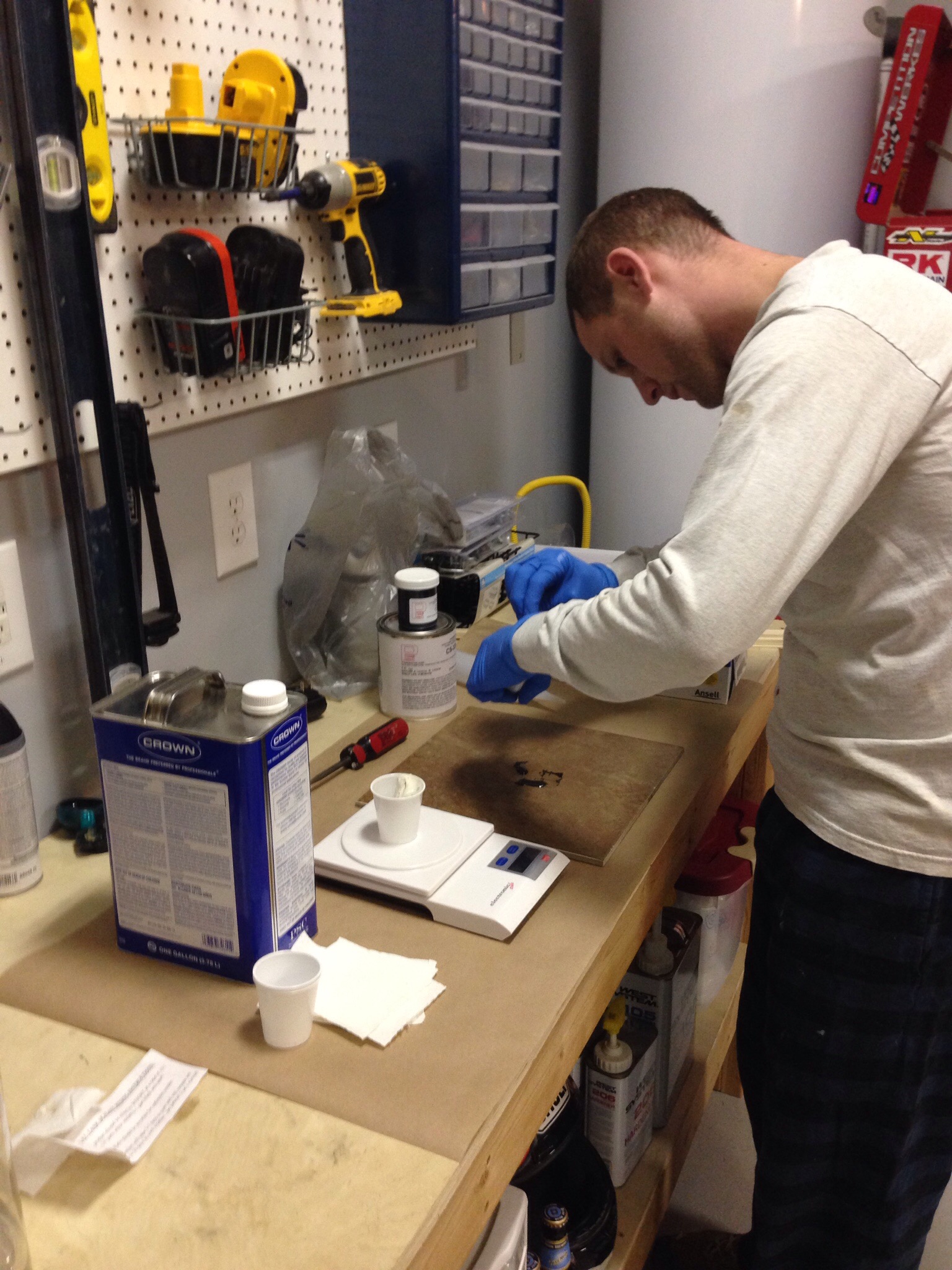
 This is where things can get sticky. The biggest advice I read was to be prepared for working with Pro Seal and to wear two pairs of gloves while replacing the outer pair often. Once Pro Seal touches a surface, it doesn’t come off without MEK. I used a postage scale to weigh the components, ceramic tile to mix, and the applicator gun from Brown Tool. All that equaled a clean, easy process of using Pro Seal.
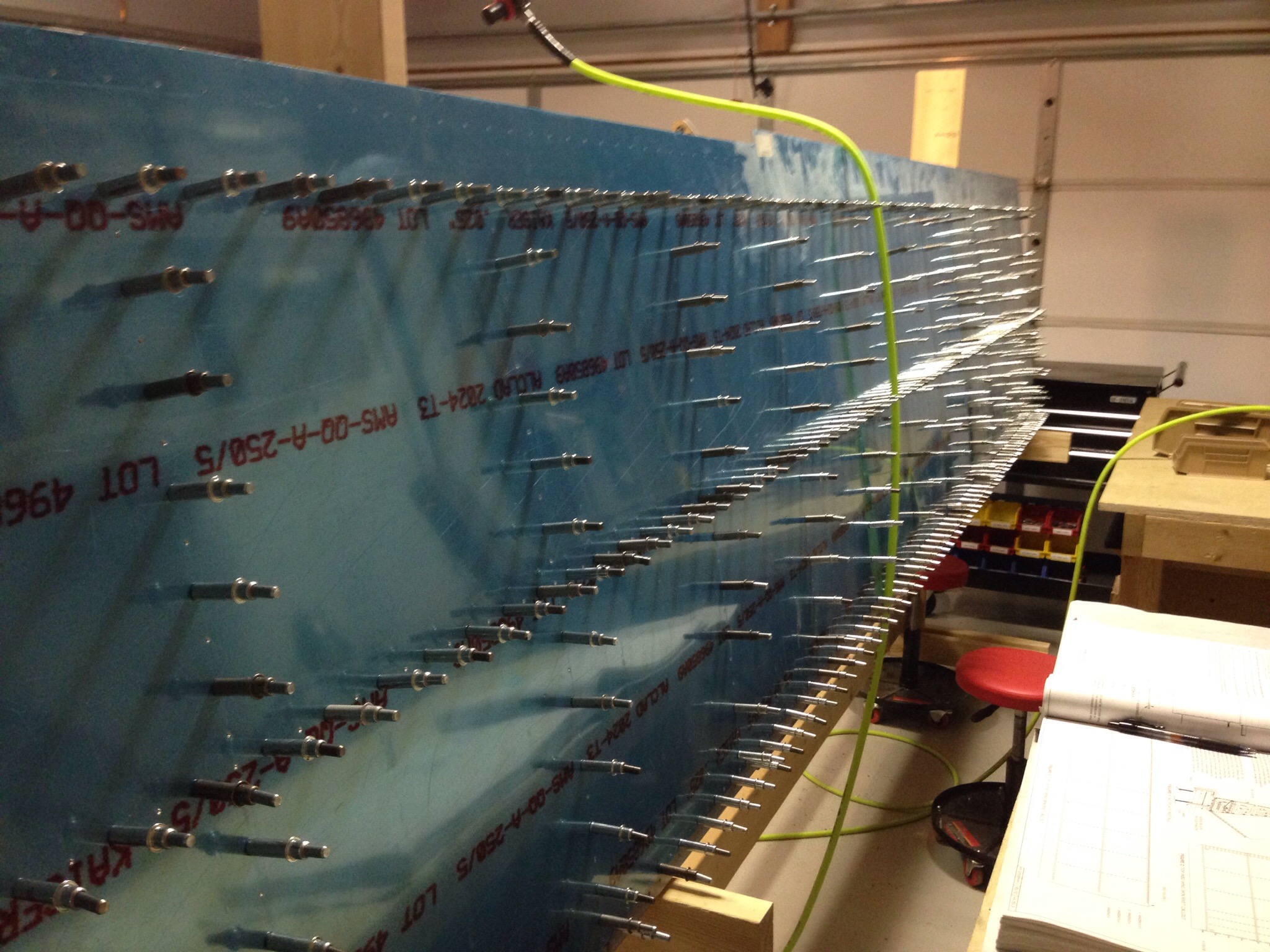
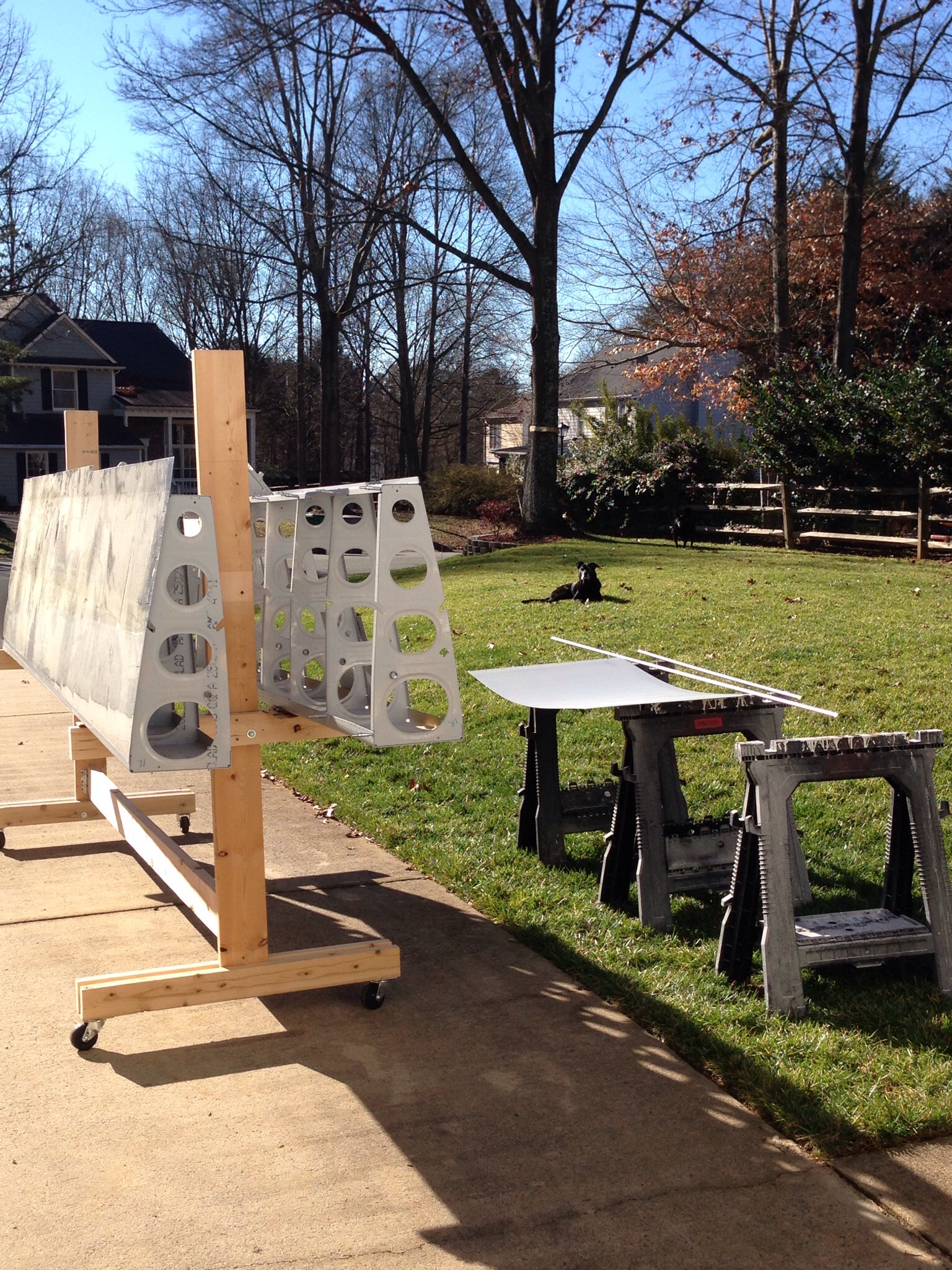
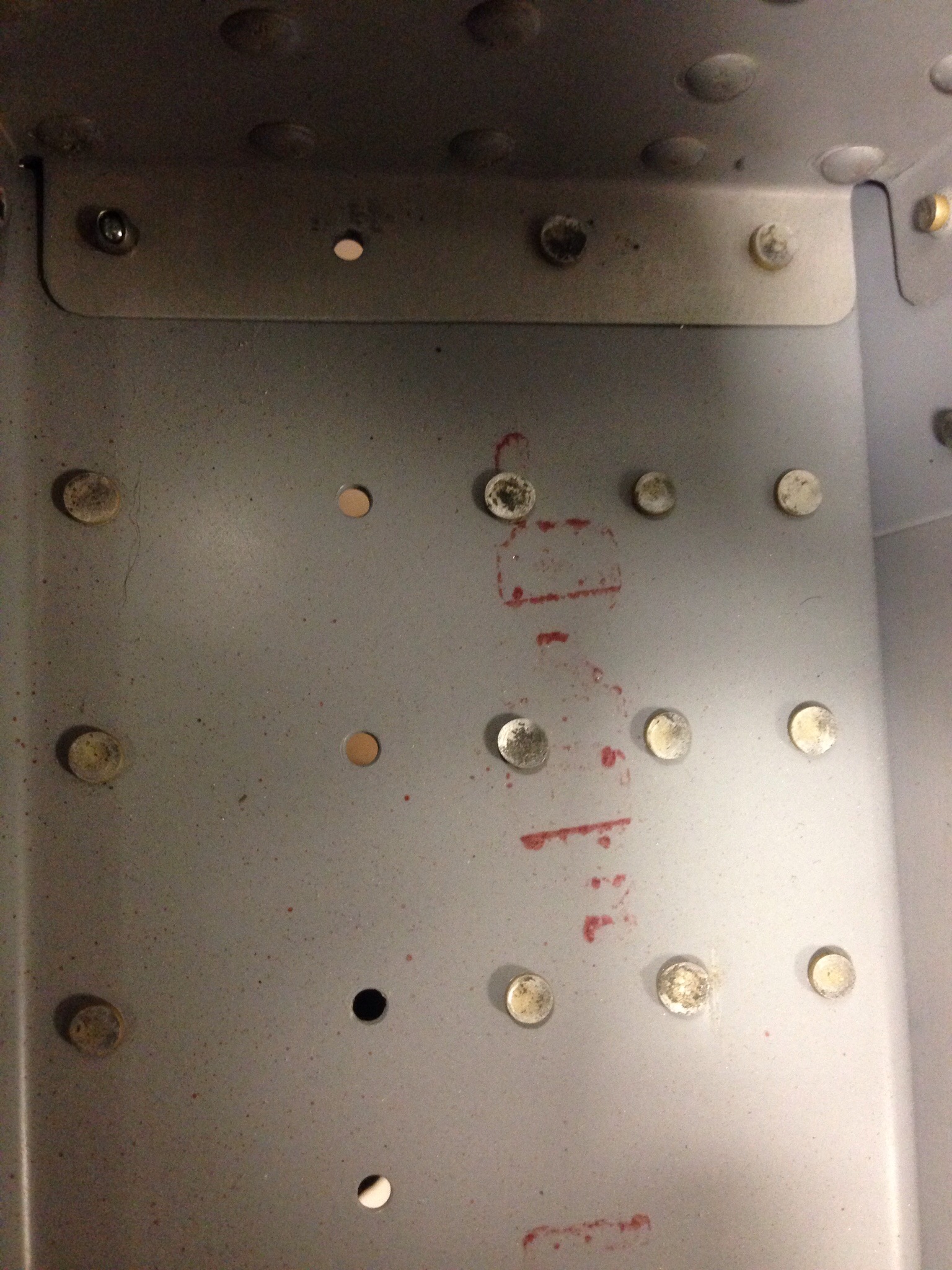
 The wife-copilot-cobuilder-photographer came out to help and we started with the stiffeners. I chose to 100% cleco the parts in place and come back for riveting the next day. It greatly reduces the mess and actually makes riveting easier. Kayla the flight engineer dog came out to support the project as well. The next day, I came out to rivet the stiffeners with a dab of Pro Seal in each dimple to seal the mfr head of the rivets. Turned out well with the tank die dimple, as it’s a nice flush surface.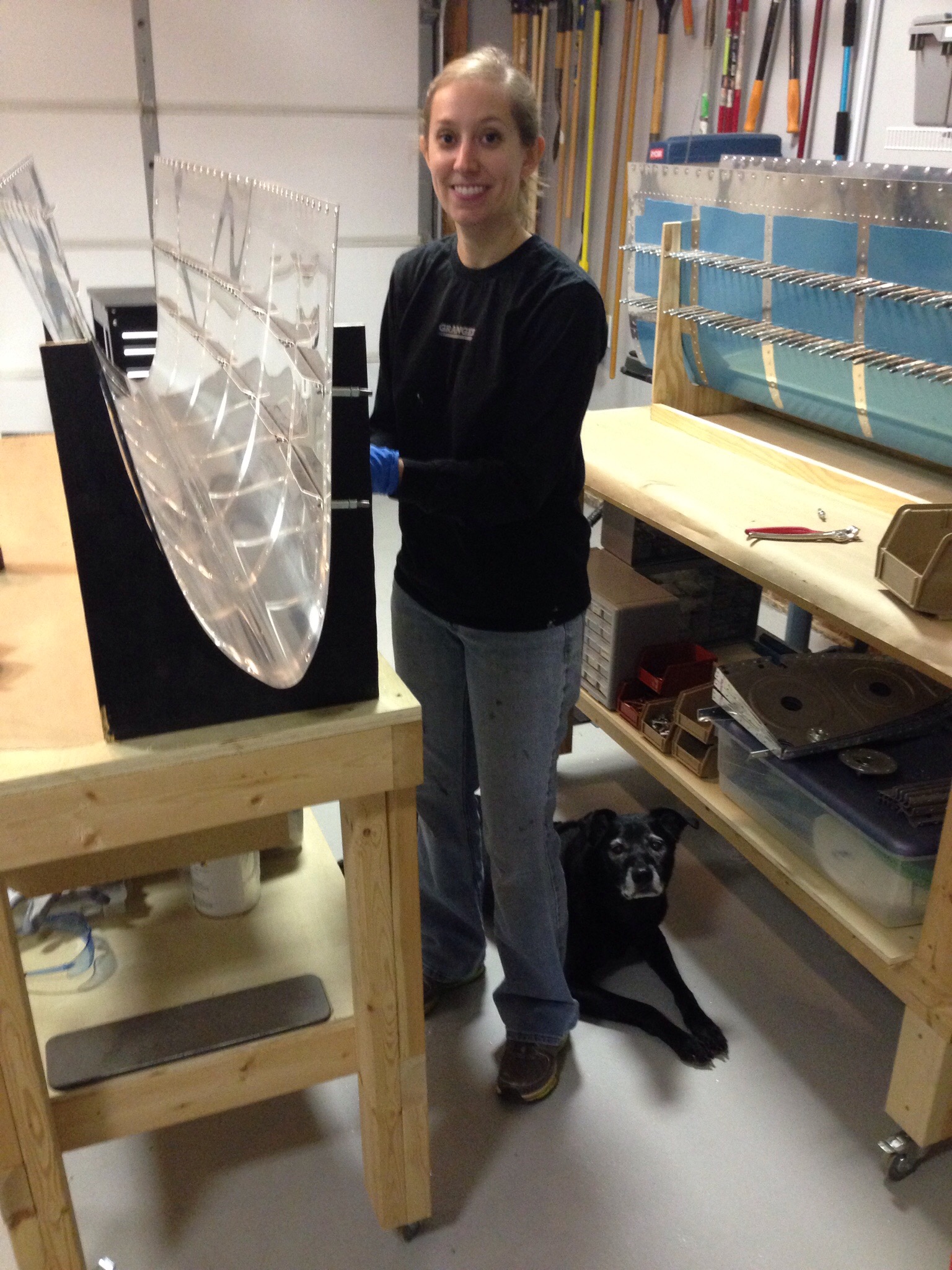
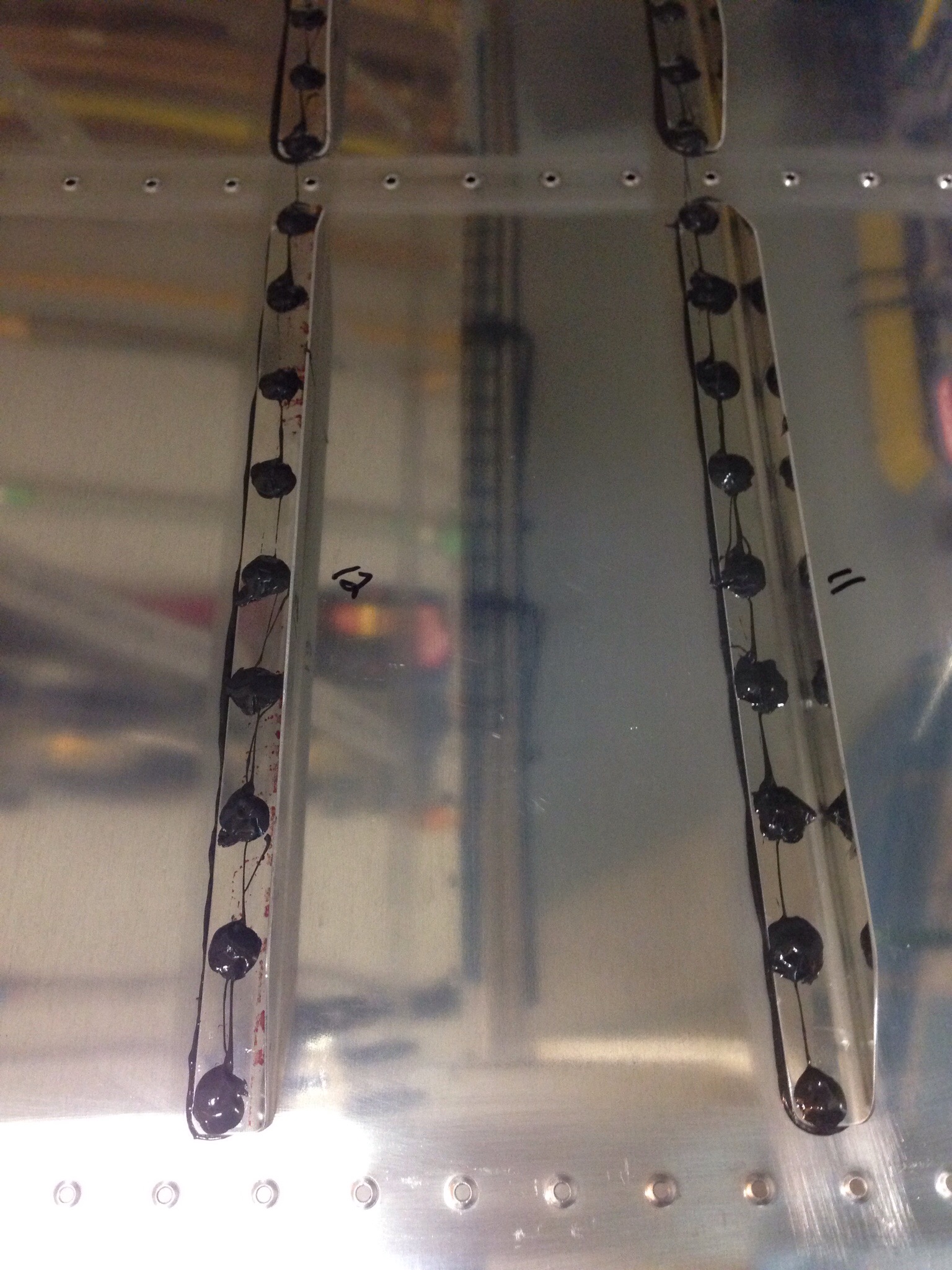 I went solo and finished up the ribs and the j-stiffener for each tank after mixing up yet more sticky stuff. I found that letting the sealant cure for one day was perfect for riveting, so the following day was spent riveting the ribs and j channel. I also went back and put a blob of sealant on each shop head, completely sealing each rivet (hopefully) to prevent any fuel seepage.
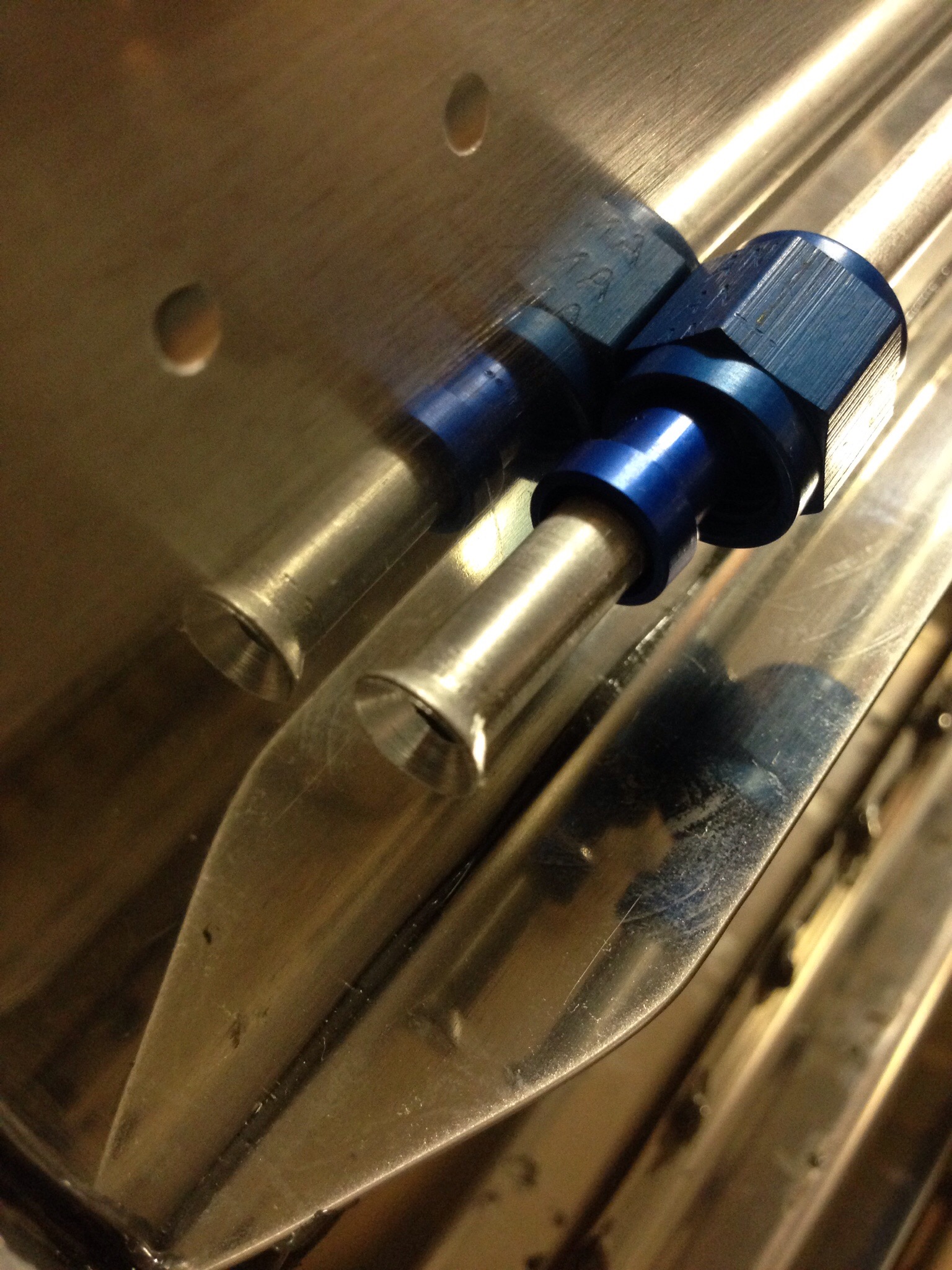
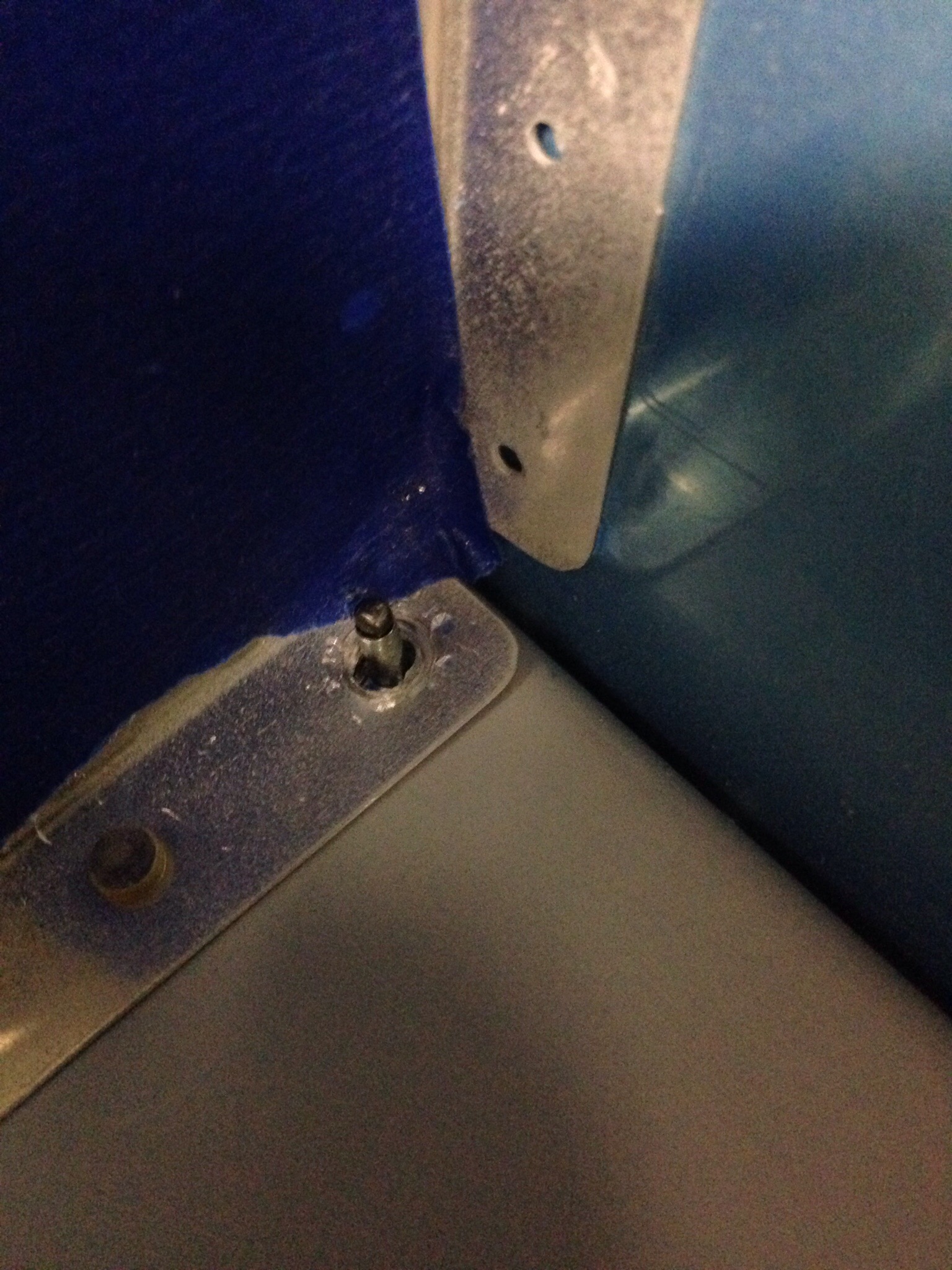
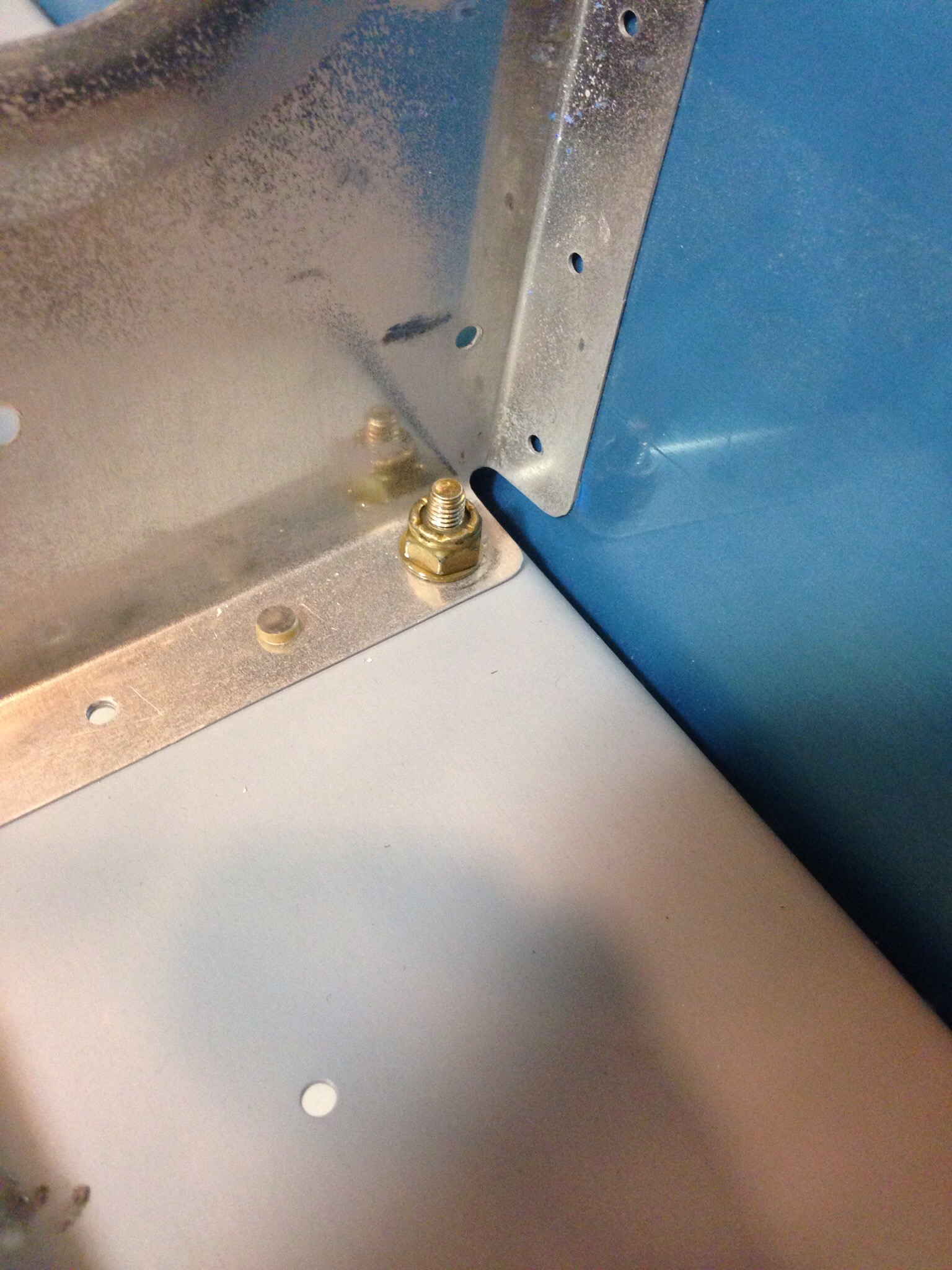
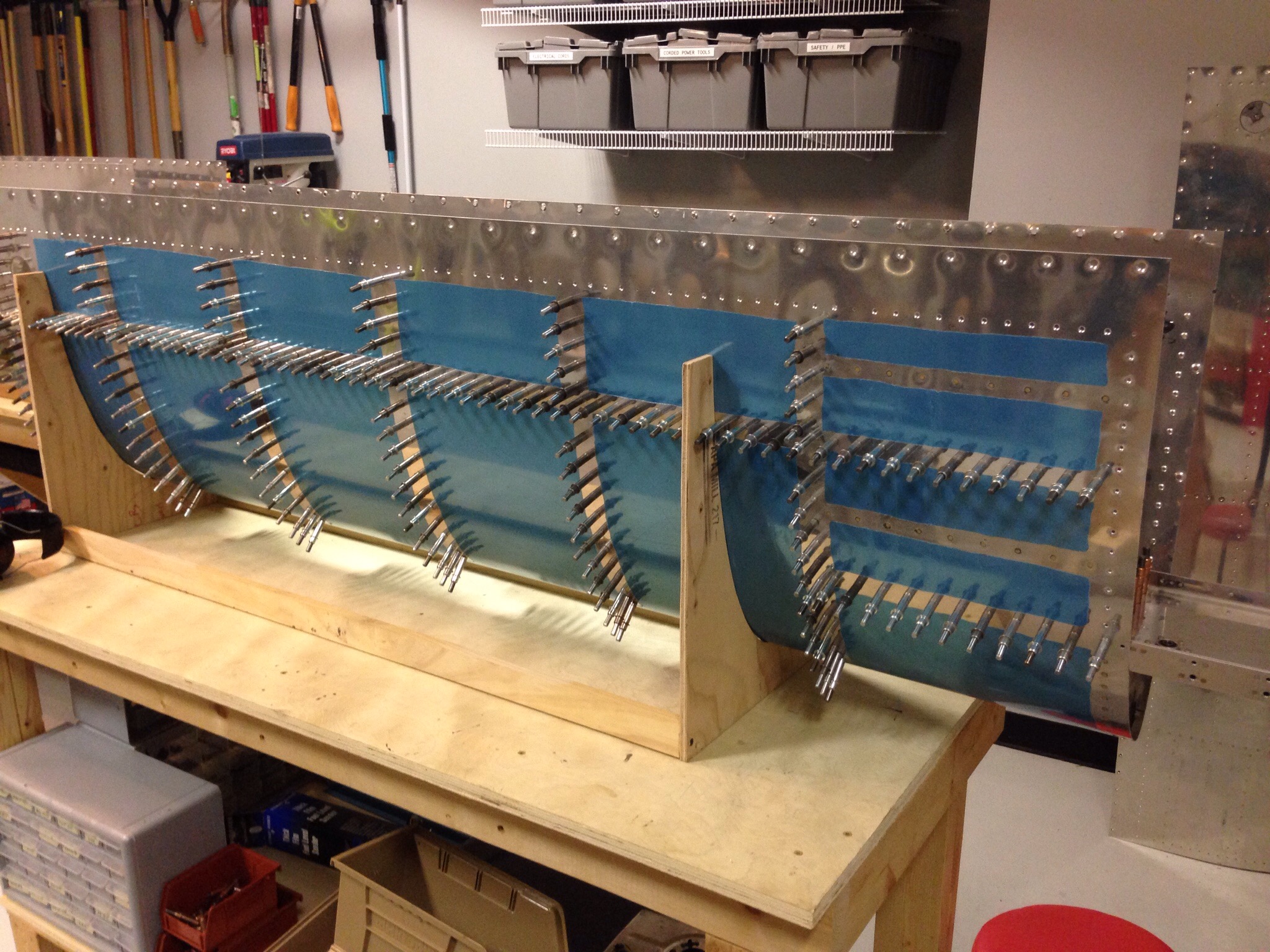 The next step is to fabricate the fuel vent lines, which consists of straightening very carefully the aluminum tubing and flaring one end to accept the AN fitting through the end rib. I skipped ahead on the plans and riveted the end rib on before putting the line in, but was able to easily work around it. None the less, it’s a good lesson to stick to the plans. Pro Seal is permanent, so no going back and redoing!